Landscape Experts: Custom Design, Installation & Native Plant Specialists
Most homeowners start in the same place: staring at a tired patch of grass or a slope that turns to mud every November, wondering how to close the gap between that reality and an outdoor space worth spending time in.
In the Pacific Northwest, landscape design and installation involves navigating clay-heavy soils, managing drainage on sloped lots, and building something that holds up through Issaquah winters and Sammamish summers alike.
A professional design-build approach turns that uncertainty into a cohesive plan. One team handles everything —from the structural base of a new retaining wall to the precise placement of native shrubs selected for your specific site conditions—so nothing gets lost between the drawing and the ground.
This guide covers what the process actually looks like, what it realistically costs in the Seattle area, and how to build a landscape that manages our regional challenges while looking intentional in every season.
What Is Landscape Design and Installation?
Landscape design and installation is the full-service process of planning, designing, and physically building an outdoor space, starting with site analysis and concept drawings and ending with planted beds, finished hardscape, a working irrigation system, and a completed walkthrough with the homeowner. It covers everything between "I want to do something with this yard" and a finished, functional outdoor environment.
This is distinct from general landscaping maintenance (mowing, weeding, seasonal cleanup) and from standalone landscape architecture, which focuses primarily on large-scale design and engineering without execution.
Landscape Design and Installation at a Glance: Professional landscape design and installation is a full-service process that takes your outdoor space from concept to completion. It includes site analysis, custom design plans, material and plant sourcing, grading and drainage, hardscape construction, softscape planting, irrigation installation, and a final walkthrough with the homeowner.
What Is the Difference Between Landscape Design and Landscape Architecture?
Landscape architects hold state-licensed degrees and typically work on large-scale public, municipal, or commercial projects that involve structural engineering, land grading at scale, and permitting processes that go well beyond planting plans.
Landscape designers focus on residential and smaller commercial properties: planting compositions, outdoor living layouts, hardscape integration, and aesthetic planning grounded in horticultural knowledge.
For most homeowners, a professional landscape designer within a design-build firm is the right fit. You get a custom plan developed for your specific site, executed by the same team that designed it, without the overhead of a licensed architecture firm.
What Does the Landscape Design and Installation Process Look Like From Start to Finish?
The process follows a clear sequence, though the pace and complexity vary significantly by project size. Here is what each phase involves when you work with a professional landscape design team.
Phase 1: Initial Consultation and Site Analysis
The first meeting happens on your property. A landscape professional walks the site, evaluates existing conditions (sun and shade patterns, soil type, drainage behavior, slope, mature trees, structures, views, and utility locations), and spends time understanding your goals. What do you want the space to do? Where do you spend time outside? Do you have children or dogs? Are deer a persistent issue? What’s your realistic maintenance commitment?
Before that meeting, it helps to gather a few things: any survey documents or site plans you have, a sense of your overall budget range, photos of landscapes you find appealing, and a list of what the existing yard does or doesn’t do well. The more clearly you can communicate what you want the space to feel like, the more efficiently the design phase moves.
A consultation should also include a frank discussion of budget. Experienced designers work within real constraints. Sharing your number upfront allows the team to prioritize scope rather than design something beautiful that gets value-engineered into something disappointing.
Phase 2: Custom Design Development and Plan Presentation
The design phase produces the documents that guide everything that follows: concept sketches, scaled planting plans, hardscape layout drawings, material palettes, and in many cases digital renderings that show the finished space in context. A complete design plan includes both a visual representation and a detailed scope of work with associated cost estimates.
Most landscape design firms build one or two rounds of revisions into the process. This is where you adjust plant selections, shift the patio footprint, reconsider the path material, or add an element you hadn’t initially prioritized. The goal at the end of this phase is a plan you’re genuinely excited to build, with a cost estimate that reflects the actual scope.
Reputable companies do produce formal design plans. Proposals that skip this step, moving straight to installation without a documented design, are a red flag. A project without a plan has no standard to be held to.
Phase 3: Material and Plant Sourcing
A full-service landscape team handles all sourcing. That includes nursery runs for plant material (selected for your specific site conditions, not whatever happens to be available at a retail garden center that week), ordering stone, pavers, gravel, and edging materials, coordinating soil and mulch delivery, and specifying irrigation components and lighting fixtures.
The advantage of established trade relationships with regional nurseries matters here. Plant availability varies by season and year. A team with existing supplier relationships can source the specific species, sizes, and quantities called for in your design plan, or identify appropriate substitutions without compromising the design intent.
Phase 4: Installation, Construction, and Planting
On-site work follows a logical sequence: grading and drainage preparation first, then hardscape construction (patios, walkways, retaining walls, steps), irrigation system installation, soil preparation and amendment, planting, mulching, and finally lighting. Each phase sets the conditions for the next.
Weather affects scheduling throughout this region, particularly in spring and fall. A reputable team builds weather contingencies into the project timeline and communicates proactively when conditions change the schedule. Soil work and hardscape base preparation require dry enough conditions to compact properly. Planting, on the other hand, often benefits from the mild, moist conditions the Pacific Northwest provides for much of the year.
Phase 5: Final Walkthrough and Aftercare
The walkthrough covers the completed project against the design plan: verifying plant placement, testing the irrigation system zone by zone, reviewing establishment watering schedules (most new plantings require supplemental irrigation through the first summer regardless of species), and going over any warranty or guarantee terms.
This conversation matters. A well-installed landscape still requires the right care in the first 12 to 18 months. Understanding what your plants need during establishment is the difference between a project that thrives and one that underperforms before it ever gets started.
Comparing DIY vs. Professional Design and Installation
| Factor | DIY Landscaping | Professional Design and Installation |
|---|---|---|
| Design quality | Limited to homeowner’s knowledge and available time | Custom plan based on site analysis, horticulture, and design principles |
| Plant selection | Often based on retail availability | Species selected for site conditions, climate zone, deer resistance, and long-term growth |
| Drainage and grading | Frequently overlooked | Engineered for proper water management |
| Hardscape integration | Basic pavers or loose stone | Structural base preparation, proper edging, code-compliant retaining walls |
| Irrigation | Manual watering or basic hose timers | Zoned drip and spray irrigation designed for plant and site-specific efficiency |
| Timeline | Months to years on weekends | Weeks to a few months depending on scope |
| Long-term cost | Lower upfront, higher replacement and correction costs | Higher upfront, lower long-term maintenance and replacement |
How Much Does Professional Landscape Design and Installation Cost?
Most residential landscape design and installation projects in the Seattle, Sammamish, and Issaquah area run between $15,000 and $60,000 for a well-designed front and backyard transformation. Scope, materials, plant sizes, and site conditions are the primary cost drivers.
To give a clearer picture: design fees alone run $1,500 to $5,000 or more depending on property size and plan complexity. Front yard installation typically falls between $10,000 and $40,000. Combined front and backyard projects range from $25,000 to $100,000. Estate-level projects with extensive hardscape, water features, and custom outdoor living areas can reach $100,000 to $250,000 or more.
Landscape Design and Installation Pricing: What Drives the Cost?
| Cost Factor | Impact on Price |
|---|---|
| Property size and work area square footage | Larger areas require more materials, labor, and plant material |
| Hardscape complexity | Structural elements are the most labor-intensive and material-heavy components |
| Plant size at installation | 1-gallon vs. 5-gallon vs. specimen trees dramatically affects plant budget |
| Soil conditions and grading requirements | Rocky soil, steep slopes, or heavy clay require additional preparation and labor |
| Irrigation system | Zoned smart irrigation adds cost upfront but reduces water waste long-term |
| Landscape lighting | Low-voltage systems add ambiance and safety but add to the overall budget |
| Permits and engineering | Retaining walls over 4 feet, significant grading, or stormwater management may require permits |
Budget reference for this region: For most residential landscape design and installation projects in Seattle, Sammamish, and Issaquah, plan for $15,000 to $60,000 for a professionally designed and installed transformation of one or both yards. With a design-build firm, design fees are often incorporated into the total project cost rather than billed separately upfront.
Can Landscaping Services Offer Phased Installation to Spread Costs Over Time?
Yes, and for many homeowners it’s the most practical approach. A professional landscape designer creates a master plan for the full property vision, then structures installation in phases that make sense logistically and financially. A common sequence:
Phase 1 covers the front yard and primary hardscape.
Phase 2 addresses backyard planting and irrigation.
Phase 3 completes the outdoor living area and lighting.
The key is designing the complete vision upfront. Phasing without a master plan results in disconnected work that costs more to reconcile later. When each phase is built from a unified design, the finished property looks intentional rather than assembled over time.
MTS Tree & Landscape offers phased landscape installation plans so you can build toward your full vision on a timeline that fits your budget. Contact us to start with a consultation.
Should I Hire a Landscape Designer, a Contractor, or a Design-Build Team?
There are three models, and understanding the differences helps clarify which fits your situation.
| Model | What You Get | Best For |
|---|---|---|
| Standalone Landscape Designer | Design plans and plant lists; you hire a separate contractor to build | Homeowners who want design direction but will manage installation or source their own crew |
| Landscape Contractor Only | Installation labor, no formal design process | Simple projects (sod, basic planting, mulch) that don’t require a plan |
| Design-Build Landscape Firm | One team handles design, sourcing, and installation from start to finish | Most residential and commercial projects where design intent needs to be preserved through construction |
For most homeowners, the design-build model delivers the best outcome. When the team that designs the project also builds it, there’s no translation gap between the drawing and what ends up in the ground. There’s also a single point of accountability for the finished result. If something doesn’t look right or perform correctly, you’re not triangulating between a designer and a separate contractor.
How Do I Choose the Best Landscape Design and Installation Company?
The proposal stage is where most homeowners make their best and worst decisions. Comparing proposals across companies is useful, but only if you know what a quality proposal in fact contains.
What to Look for in a Landscape Design Proposal
A thorough, professional proposal includes:
- A detailed scope of work describing exactly what will be built, planted, and installed
- Itemized pricing broken down by phase or category, not a single lump sum
- A plant species list with sizes at installation (1-gallon, 5-gallon, box size, etc.)
- Material specifications (paver type and thickness, wall stone, mulch depth, edging style)
- A project timeline with milestones and weather contingencies
- A payment schedule tied to project phases, not front-loaded
- Warranty and guarantee terms in writing
- Proof of Washington State contractor license and current general liability insurance
Red Flags When Comparing Landscaping Proposals
Some warning signs warrant walking away before you sign anything:
- No written contract or design plan before breaking ground
- Full payment demanded upfront
- No proof of contractor license or general liability coverage (verify any contractor at lni.wa.gov)
- Vague material descriptions such as “assorted shrubs” or “standard pavers”
- Inability or unwillingness to provide current client references
- Pressure to decide before you’ve had time to review the proposal thoroughly
MTS Tree & Landscape provides detailed, transparent proposals for every landscape design and installation project. Call (425) 369-8733 to request a consultation and a comprehensive project estimate.
Which Landscaping Companies Specialize in Native Plants, Pollinator Gardens, and Rain-Friendly Designs?
Demand for ecologically responsible landscape design has grown steadily across the Seattle area, and for good reason. Native plant landscapes perform better over time, cost less to maintain, and support the local ecosystem in ways that conventional ornamental plantings simply don’t.
Native Plant Palette for the Pacific Northwest
- Sword fern —evergreen, shade-tolerant, thrives in moist woodland conditions
- Oregon grape —deer-resistant, year-round structure, yellow blooms in early spring
- Red flowering currant —hummingbird magnet, early season color, adaptable to sun or part shade
- Salal —excellent groundcover for shaded slopes, drought-tolerant once established
- Pacific dogwood —stunning spring bloom, strong fall color, supports native birds
- Native sedges —ideal for wet areas, stream edges, and rain garden margins
- Serviceberry —multi-season interest with spring flowers, summer fruit, and fall color
These species are adapted to the region’s wet winters and dry summers, which means less supplemental irrigation once established, fewer pest and disease issues, and better long-term resilience. The USDA Plant Hardiness Zone Map provides zone reference if you’re evaluating plant suitability for your specific property.
Pollinator garden design requires knowing which plants serve which ecological functions—selecting species with staggered bloom times to support pollinators across the full season, incorporating host plants for native bee and butterfly species, and committing to pesticide-free management in those areas.
Rain gardens are increasingly relevant across Sammamish, Issaquah, and other municipalities in the Puget Sound watershed. A rain garden is a shallow, planted depression designed to capture and slowly absorb stormwater runoff from roofs, driveways, and paved surfaces. Built with the right native plantings and soil mix, they reduce runoff volume, filter pollutants, and recharge groundwater. The EPA’s rain garden guidance provides a useful technical overview of design principles and site suitability.
Benefits of Native Plant Landscape Design in the Pacific Northwest: Native plants are adapted to local rainfall patterns and require less supplemental irrigation once established. They support local pollinators, birds, and beneficial insects. Many native species are naturally deer-resistant. Rain gardens built with native plants help manage stormwater runoff, which is increasingly required or incentivized by municipalities throughout the Puget Sound region.
What Is the Difference Between Hardscape and Softscape in Landscape Design?
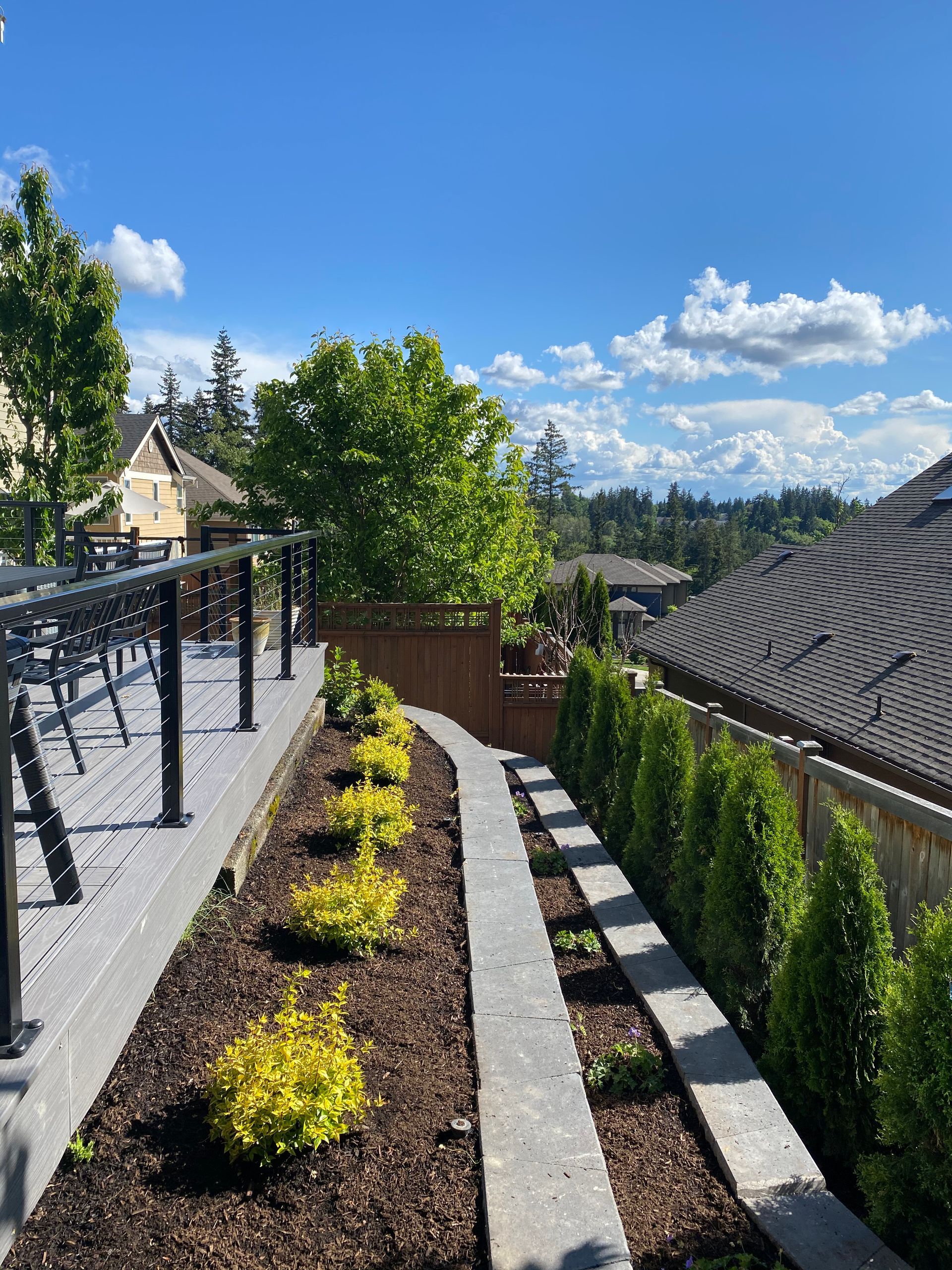
Hardscape refers to all non-living structural elements in a landscape: patios, walkways, retaining walls, steps, fire pits, outdoor kitchens, water features, and fencing.
Softscape refers to all living elements: trees, shrubs, perennials, groundcovers, lawn, ornamental grasses, and the soil that supports them.
A balanced landscape design integrates both. Hardscape creates structure, function, and year-round presence. Softscape provides seasonal change, texture, ecological value, and the sense that a space is alive. The ratio depends on how the space will be used, but neither element works as well in isolation.
| Element | Hardscape | Softscape |
|---|---|---|
| Components | Patios, walkways, walls, steps, fire pits, water features, fencing | Trees, shrubs, perennials, groundcovers, lawn, ornamental grasses |
| Maintenance | Low (cleaning, sealing, occasional repair) | Moderate to high depending on plant selection |
| Seasonal change | Consistent year-round | Significant seasonal variation |
| Cost driver | Materials and structural labor | Plant size, species, and quantity |
| Longevity | 20 to 50+ years with proper installation | Varies by species; trees can outlast the home |
| Ecological value | Low (drainage and impervious surface considerations) | High (habitat, pollination, stormwater management) |
How Long Does a Full Landscape Design and Installation Project Take?
A moderate residential landscape design and installation project typically takes 2 to 6 weeks on site once installation begins, following a design phase of 2 to 6 weeks. Larger projects or phased installations can extend to 2 to 4 months for the full scope.
Factors that affect timeline include permitting requirements (retaining walls over 4 feet, significant regrading, or stormwater features may require municipal permits in Seattle, Sammamish, and Issaquah), material lead times for custom stone or specialty pavers, weather delays during the Pacific Northwest’s unpredictable shoulder seasons, and crew scheduling during peak summer demand. A realistic timeline discussion should happen during the consultation phase, not after the contract is signed.
What Increases Curb Appeal in Landscaping?
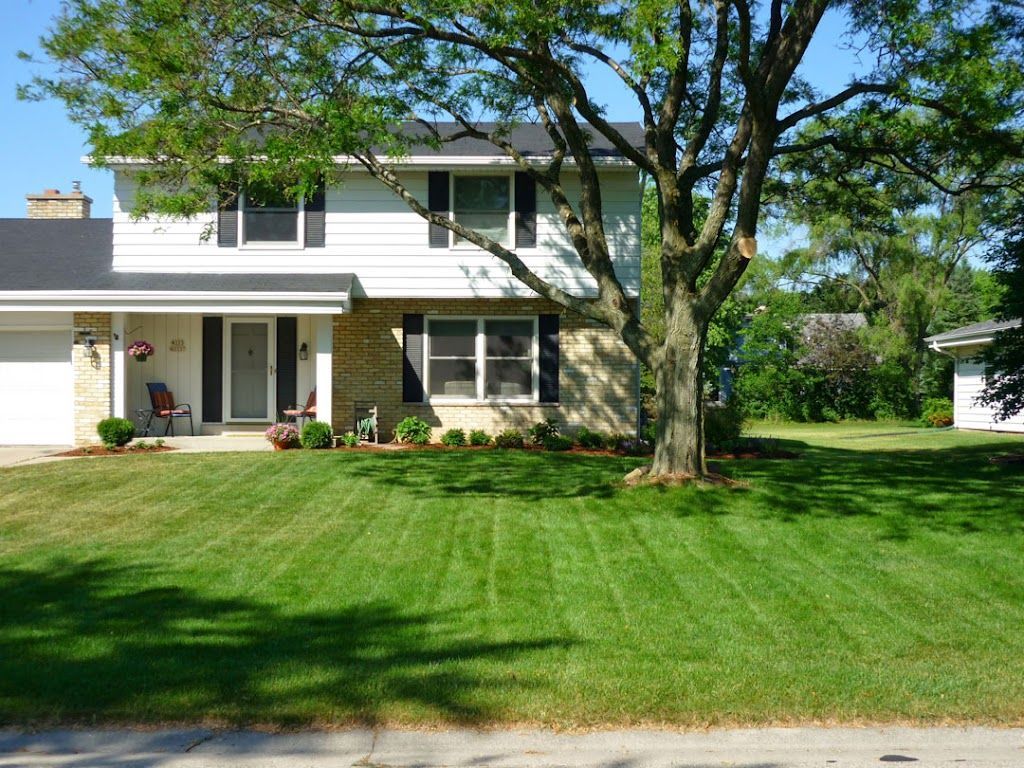
Front yard landscape design consistently delivers some of the strongest return on investment in residential property improvements. Industry studies put professional landscaping ROI at 100% to 200% at resale, with curb appeal influencing buyer perception before they ever walk through the front door.
The highest-impact elements in a front yard transformation:
- A defined, well-constructed entry path that connects the street or driveway to the front door
- Layered planting beds with year-round visual interest (evergreen structure, seasonal color, textural variety)
- A well-placed specimen tree or focal shrub that anchors the composition
- Clean, consistent edging that separates planted areas from lawn or hardscape
- Low-voltage landscape lighting that highlights architectural features and pathways after dark
- A well-maintained lawn, or a thoughtful groundcover alternative for slopes or shaded areas
The details matter as much as the plants. A professionally designed front yard landscape doesn’t just add plants to existing beds. It reconsiders the spatial organization of the entire front entry, addresses drainage and grade issues that affect long-term performance, and selects plants that will look proportional and intentional as they mature.
How Do Irrigation Systems Work in Landscaping?
A professionally designed irrigation system is divided into zones, with each zone covering an area with similar water requirements and similar precipitation rates. Lawn areas, shrub beds, and drip irrigation for trees and perennials operate on separate zones with different run times and scheduling.
Smart irrigation controllers adjust watering schedules based on real-time weather data or soil moisture sensor readings, eliminating the waste of running irrigation after a rainfall or during a cool stretch in late spring. Controllers certified under the EPA WaterSense program meet verified efficiency standards and are a sound choice for any new installation. A properly designed system reduces water use by 30% to 50% compared to manual watering and significantly reduces plant loss from inconsistent moisture.
The critical mistake in residential landscaping is treating irrigation as an afterthought, designing the planting plan first and retrofitting irrigation around it. Irrigation should be designed in parallel with the planting plan so zone coverage, head spacing, and emitter placement serve the actual plant layout rather than approximating it.
What Are the Benefits of Professional Landscaping?
| Benefit | What It Means in Practice |
|---|---|
| Increased property value | Professional landscape design and installation typically adds 10% to 15% to residential property value, with strong curb appeal front yards delivering some of the highest ROI |
| Energy efficiency | Deciduous trees shading south and west-facing windows reduce summer cooling loads; evergreen windbreaks on the north side lower winter heating costs |
| Stormwater management | Native plantings, rain gardens, and pervious hardscape reduce runoff volume and the burden on municipal systems |
| Lower long-term maintenance | Plants selected for your actual soil, sun, drainage, and deer pressure require less intervention as they mature |
| Extended outdoor livability | A well-designed outdoor space functions as additional living area throughout the Pacific Northwest’s long mild season |
| Ecological value | Native plantings support local pollinators, birds, and beneficial insects while reducing the need for supplemental irrigation and chemical inputs |
Great Landscaping Starts With a Great Plan
The projects that hold up best over time share a few characteristics: the design was specific to the site, the plants were selected for how they genuinely perform in Pacific Northwest conditions, and the installation was built by the same team that designed it.
The best time to invest in that plan is before anything gets installed.
Correcting a landscape project built without one is always more expensive than designing it correctly the first time. That’s a pattern we see consistently across properties in Seattle, Sammamish, and Issaquah, and it’s the clearest argument for starting with a professional design process rather than working backward from whatever’s already in the ground.
MTS Tree & Landscape delivers professional landscape design and installation from first consultation to final walkthrough for residential and commercial properties throughout the Seattle area. Explore our landscaping services or call (425) 369-8733 to schedule your design consultation today.
Frequently Asked Questions
What is landscape design and installation?
Landscape design and installation is the complete process of planning, designing, and building an outdoor space, including site analysis, custom plans, hardscape construction, planting, irrigation, and final walkthrough.
How much does a typical landscape design and installation project cost?
Most residential landscape design and installation projects in the Seattle area range from $15,000 to $60,000 or more depending on scope, materials, and property size.
How long does a landscape installation project usually take?
A moderate residential project typically takes 2 to 6 weeks for installation after the design phase, with larger or phased projects extending to 2 to 4 months.
Do I need a professional landscape designer or can I do it myself?
DIY works for simple planting projects, but professional landscape design is recommended for any project involving grading, drainage, hardscape, irrigation, or a cohesive multi-season planting plan.
What should I look for in a landscape design proposal?
A quality proposal includes a detailed scope of work, itemized pricing, a plant species list with sizes, material specifications, a project timeline, and proof of contractor licensing and insurance.
What is the difference between hardscape and softscape?
Hardscape refers to all non-living structural elements like patios, walls, and walkways, while softscape includes all living elements like trees, shrubs, perennials, and groundcovers.
Can landscape projects be done in phases to spread out costs?
Yes, a professional landscape designer can create a master plan that is installed in phases over months or years while maintaining design cohesion across each stage.
What are the best plants for landscaping in the Pacific Northwest?
Native species like sword fern, Oregon grape, salal, red flowering currant, and Pacific dogwood thrive in the region’s climate with minimal supplemental irrigation once established.
How does professional landscaping increase property value?
Professional landscape design and installation typically increases residential property value by 10% to 15%, with well-designed front yards delivering some of the highest curb appeal ROI.
What does a landscape design consultation include?
A consultation typically includes an on-site visit, evaluation of existing conditions, a discussion of goals and budget, and preliminary recommendations before formal design work begins.
How do I verify a landscaping company’s credentials?
Verify the company’s Washington State contractor license through the Department of Labor and Industries, confirm general liability insurance, and check for industry certifications and client references.
You might also like