Tree Removal Experts: Pricing by Tree Size, Species & Access Difficulty
Most homeowners come to us having already searched “how much does tree removal cost” and found numbers that range so widely they’re essentially useless. $300 to $5,000 doesn’t tell you much about the 70-foot Douglas fir sitting 12 feet from your garage.
Tree removal pricing is specific. It’s driven by the tree you have, the property it’s on, and the conditions a crew has to work in. This guide gives you real numbers from the Seattle, Sammamish, and Issaquah area in 2026, explains exactly what moves those numbers up or down, and covers the questions that come up on every estimate call: emergency removal, stump grinding, debris cleanup, insurance, and permits.
By the end, you’ll know what a fair quote looks like, what to ask for, and what to watch out for. Request a free estimate from MTS Tree & Landscape or call (425) 369-8733 to schedule an on-site assessment.
How Much Does Tree Removal Actually Cost?
Tree removal pricing for most residential properties runs between $200 and $2,000+, with the average homeowner paying $750 to $1,500 per tree. Three factors drive most of the variation: tree height, species (which affects trunk diameter, wood density, and root structure), and how difficult it is for a crew to access the tree with equipment.
A small ornamental tree under 25 feet typically runs $200 to $500. A large Douglas fir or mature maple over 60 feet near a structure or power lines can reach $2,500 to $5,000 or more. Emergency removal after storm damage adds 25% to 75% to standard pricing due to urgency, hazardous conditions, and after-hours labor. Stump removal is almost always a separate line item, averaging $150 to $500 depending on stump diameter and root spread.
These are Seattle-area figures. Prices in this region run slightly above national averages because of the scale of Pacific Northwest conifers and the terrain and access challenges common on Eastside properties.
How Much Does Professional Tree Removal Cost for a Large Tree in a Residential Backyard?
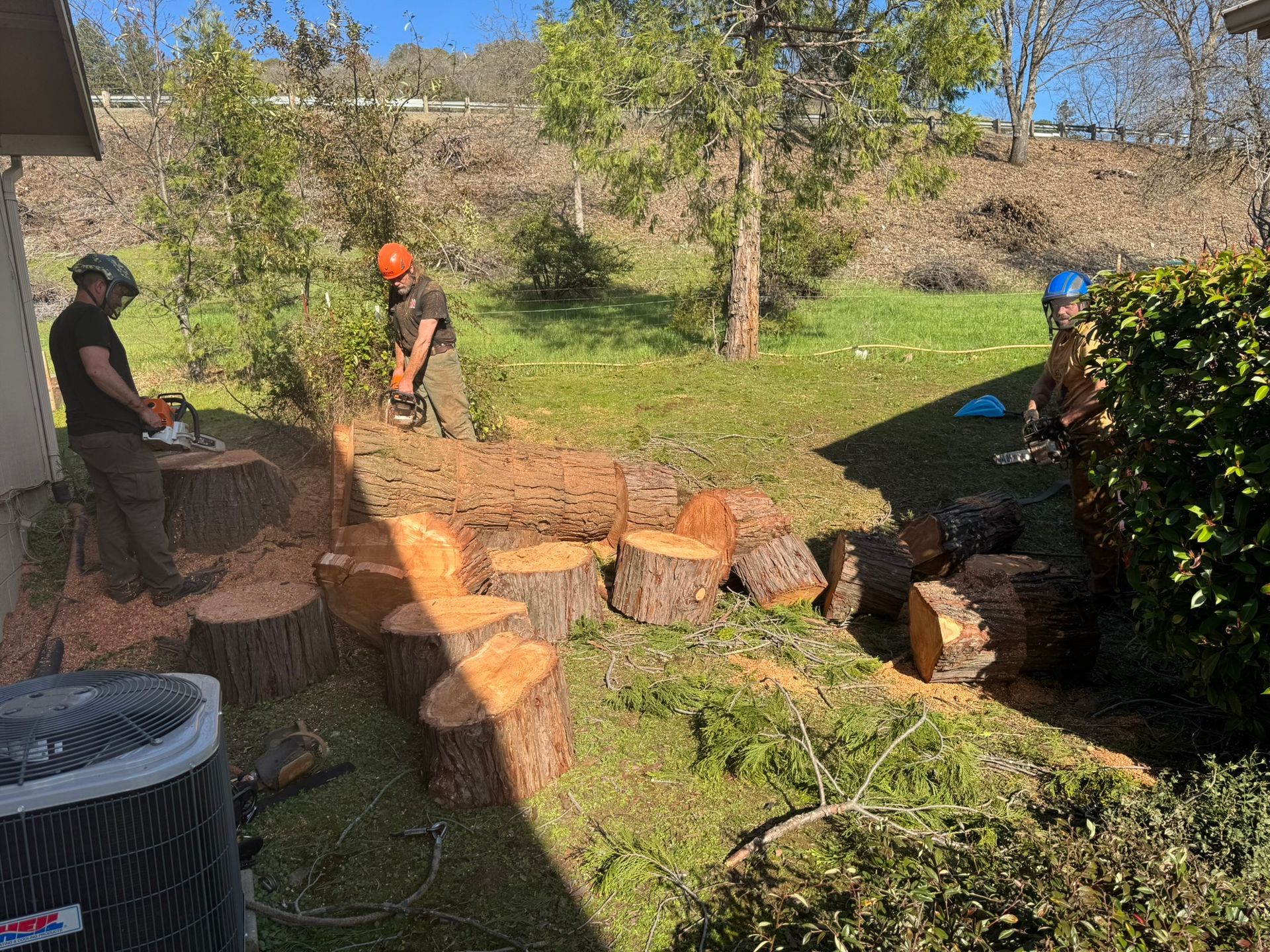
Large tree removal is the highest-cost, highest-stakes scenario for most homeowners. Define “large” as generally 60 to 100 or more feet: mature Douglas fir, western red cedar, large-canopy maples, oak, and cottonwood. These trees require more cuts, more rigging, more equipment, and more time than anything in a smaller size class.
Typical range for large tree removal: $1,500 to $5,000 or more.
What drives the price on large trees:
Height and canopy spread. A 70-foot tree takes longer to section and lower than a 40-foot tree. More cuts, more rigging passes, more labor hours in the canopy. This is not a minor difference—a 90-foot tree may take twice the crew-hours of a 60-foot tree.
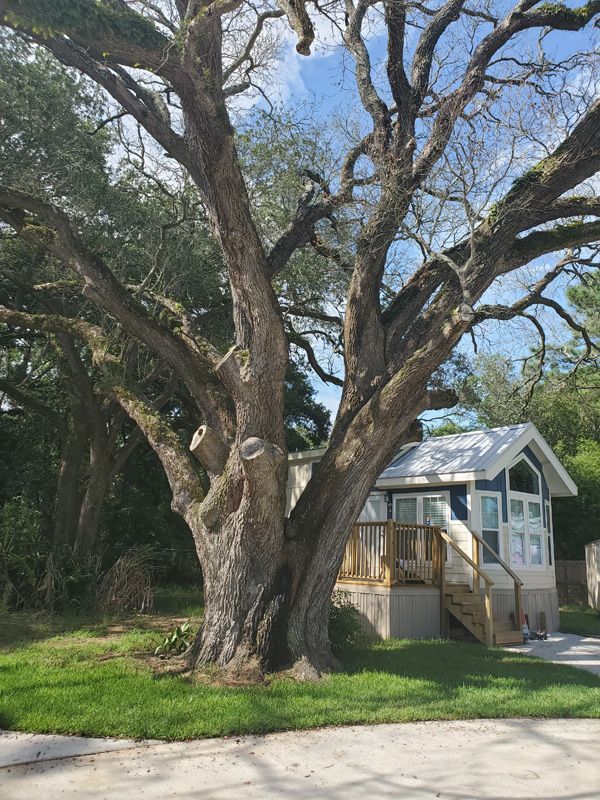
Proximity to structures. A large tree in an open yard with clear drop zones costs significantly less than one overhanging a roof, fence, garage, or deck. When a crew must rig every section and lower it on ropes rather than letting pieces fall to a clear zone, labor time can double or triple.
Access for equipment. If a crane or bucket truck can reach the tree from the street or driveway, the job moves faster and often costs less. If the tree is behind a house with no equipment access, climbers must do everything by hand, which increases labor hours substantially.
Wood density and species. Hardwoods (oaks, maples) are heavier per section than softwoods (fir, cedar, pine). Heavier wood means slower rigging, more physical labor, and more fuel for the chipper.
Real-World Example: A 75-foot Douglas fir in a backyard in Issaquah with no crane access, overhanging a fence and shed, recently quoted at approximately $3,200 including debris removal. The same tree in an open front yard with street access for a crane might have run $1,800 to $2,200.
Access is the single biggest variable on large tree removal pricing.
Need a quote for a large tree on your property? Contact MTS Tree & Landscape for a detailed estimate, or call (425) 369-8733.
What Is the Average Price Range for Removing a Single Medium-Sized Tree Near a House?
Medium trees run 25 to 60 feet and cover a broad range of common residential species: mature fruit trees, ornamental maples, birch, mid-sized conifers, and ornamental pears. Typical tree removal pricing for this size class: $500 to $1,500.
The “near a house” qualifier matters. A medium tree 30 feet from the home with a clear fall zone is a straightforward removal. A medium tree with branches overhanging the roofline requires careful sectioning and precision rigging. Expect to pay 30% to 50% more when the tree is within 15 feet of the structure.
| Tree Size | Height Range | Typical Cost Range | Common Species Examples |
|---|---|---|---|
| Small | Under 25 feet | $200 to $500 | Ornamental cherry, young maple, small fruit trees |
| Medium | 25 to 60 feet | $500 to $1,500 | Mature fruit trees, birch, mid-sized fir, ornamental maple |
| Large | 60 to 80 feet | $1,500 to $3,500 | Douglas fir, large maple, oak, cottonwood |
| Very Large | 80 to 100+ feet | $3,000 to $5,000+ | Old-growth fir, mature cedar, large oak, sequoia |
Prices are estimates for the Seattle/Eastside area and include crew labor, equipment, and standard debris removal. Actual quotes depend on site-specific conditions.
What Factors Most Affect the Price of Professional Tree Removal on Private Property?
Tree removal pricing is not a formula. It’s an assessment of your specific tree under your specific conditions. These are the factors that move the number.
- Tree height is the most referenced variable. Taller trees require more cuts, more rigging, and more time aloft. Every additional 10 feet of height adds labor and complexity in a non-linear way.
- Trunk diameter matters as much as height. A tree with a 36-inch trunk is a fundamentally different job than one with a 12-inch trunk. Larger trunks require heavier equipment, take longer to section, and produce substantially more debris.
- Species and wood density affect every phase of the job. Hardwoods (oak, maple, ash) are denser and heavier than softwoods (fir, cedar, pine). Heavier wood means each section weighs more, rigging is slower, and cleanup takes longer.
- Location and equipment access may be the biggest swing factor on complex jobs. Can a crane or bucket truck reach the tree from the street? Is there a clear drop zone, or does every piece need to be rigged and lowered?
- Proximity to structures, power lines, and utilities. Trees near power lines require coordination with the utility company and often specialized techniques. OSHA’s tree care industry safety standards document why proximity to power lines adds both complexity and cost.
- Tree condition. Dead, diseased, or storm-damaged trees can behave unpredictably during removal. Dead wood is brittle and can fracture unexpectedly.
- Number of trees. Removing multiple trees on the same property is almost always less expensive per tree than a single-tree job, because mobilization costs are spread across more work.
- Debris removal and cleanup. Most reputable companies include debris removal in the base quote. Confirm this in writing. Some companies quote the cutting separately and charge extra for hauling, chipping, and cleanup.
How Do Tree Removal Companies Calculate Pricing for Trees Close to Power Lines?
Trees near power lines are a separate category, and the premium pricing reflects genuine operational complexity, not an opportunity to add margin.
Working within 10 feet of energized power lines requires specific training, specialized equipment, and in many cases, the utility must de-energize or shield the lines before work begins. That coordination adds lead time, and sometimes the utility company charges for line shielding or de-energization.
Expect 25% to 50% or more above standard tree removal pricing for trees within striking distance of power lines. On a tree that would otherwise cost $1,200, that premium can add $300 to $600 or more.
Worth knowing: in the Seattle area, Puget Sound Energy will sometimes remove trees that are actively threatening power line infrastructure at no cost to the homeowner. Contact your utility before scheduling removal on a tree that’s in or near the power line right-of-way. You may not need to pay for it at all.
The Arbor Day Foundation’s guidance on trees and power lines provides useful context on species selection and placement for homeowners planting new trees near utility corridors.
What Should You Expect to Pay for Emergency Tree Removal After a Storm?
Emergency tree removal cost is the most expensive category, and the reasons are straightforward: after-hours labor, hazardous working conditions, and high demand competing for limited crew availability.
Emergency tree removal typically costs 25% to 75% more than standard removal. A large tree that would cost $2,500 under normal conditions may run $3,500 to $4,500 after a storm if it’s partially collapsed onto a structure and requires immediate response on a weekend night.
Typical emergency removal ranges:
- Small tree across a driveway: $500 to $1,000
- Medium tree partially down, no structure contact: $800 to $2,000
- Large tree on a roof or actively threatening a structure: $3,000 to $7,000 or more
Insurance note: Homeowners insurance typically covers tree removal cost when the tree has damaged a covered structure (house, garage, fence). If the tree fell into the yard without hitting anything, most policies do not cover removal. The Insurance Information Institute provides a clear breakdown of what standard homeowners policies do and don’t cover for tree damage.
Document everything with photos before any cleanup or crew work begins. Your insurer may send an adjuster before authorizing removal on a large claim.
Dealing with storm damage or a hazardous tree right now? Call MTS Tree & Landscape at (425) 369-8733 for emergency response in the Seattle, Sammamish, and Issaquah areas.
How Much Does It Cost to Remove Multiple Trees From Your Property at Once?
Multi-tree removal is one of the clearest opportunities to reduce per-tree cost. Mobilization costs (transporting crew, equipment, and a chipper to your property) are fixed regardless of how many trees are removed that day. Spreading those costs across three, five, or ten trees makes each one less expensive.
Most companies offer volume savings of 10% to 25% per tree on jobs of three or more trees, depending on scope and proximity. A five-tree residential clearing with a mix of medium and large trees might run $3,000 to $8,000, compared to $5,000 to $12,000 or more if each tree were quoted and scheduled individually.
If you have multiple trees on your to-do list, doing them all in one visit is the most cost-effective approach by a significant margin. Get a multi-tree estimate from our tree removal team in Seattle, Sammamish, and Issaquah.
What Are Typical Stump Removal and Stump Grinding Prices After Tree Removal?
Stump removal is almost always a separate line item in tree removal pricing. Two options are available, and choosing the right one depends on what the site will be used for after grinding.
Stump grinding uses a machine to chip the stump 6 to 12 inches below grade. The result is a depression filled with wood chips that can be used as backfill or mulch. The lateral root system remains underground to decompose naturally over 5 to 10 years. This is the standard approach for most residential applications.
Full stump and root extraction physically removes the entire stump and major root ball. It’s necessary when you’re building a structure, pouring a foundation, or need the root zone completely clear. It’s more disruptive, requires excavation equipment, and costs significantly more.
| Stump Diameter | Estimated Grinding Cost |
|---|---|
| 6 to 12 inches | $150 to $250 |
| 12 to 24 inches | $250 to $400 |
| 24 to 36 inches | $350 to $500 |
| 36+ inches | $500 or more |
A useful rule of thumb: roughly $2 to $4 per inch of stump diameter, with most companies maintaining a minimum charge around $150 regardless of size.
Full extraction typically runs $300 to $1,000 or more per stump depending on root spread and site conditions. Multi-stump discounts apply to grinding just as they do to tree removal. If you have three stumps to grind, ask about volume pricing on the same visit.
How Much Extra Should You Budget for Hauling Away Debris and Cleanup After Tree Removal?
This is one of the most common sources of surprise charges in tree removal pricing, and it’s entirely avoidable with one question: Is debris removal included in your quote?
Reputable companies include debris removal in the base price. This covers chipping branches, sectioning and loading trunk material, and hauling everything off the property. Confirm it in writing before the job starts.
If debris removal is quoted separately, expect $100 to $500 or more depending on tree size and volume. On a large conifer, the debris from the crown alone can fill a chip truck.
A few options worth knowing:
- Keep the firewood. If you want the trunk sections cut to 16 to 18-inch rounds and left in your yard, most companies will do this at no extra charge or a small discount, since it reduces their hauling volume. Seasoned Pacific Northwest fir and cedar make excellent firewood.
- Cleanup expectations. A professional crew rakes the work area, clears visible chips and sawdust, and leaves the property in good condition. If the crew leaves a pile of debris and expects you to handle it, that’s worth noting before you authorize payment.
What Is the Price Difference Between Cutting Down a Tree and Full Removal With Root Extraction?
The distinction in tree removal pricing comes down to what’s included in the scope of work.
Cutting down (felling and debris removal) is standard tree removal. The tree comes down, gets sectioned, and gets hauled away. The stump remains in the ground.
Full removal (felling, debris removal, plus stump grinding or extraction) includes everything above plus stump work.
The price difference is essentially the cost of the stump service added to the base removal:
- Medium tree: $800 (removal) plus $250 (stump grinding) = $1,050 total
- Large tree: $2,500 (removal) plus $400 (stump grinding) = $2,900 total
Bundling stump work with the tree removal during the same visit is almost always slightly cheaper than scheduling them separately, because the crew and equipment are already on site. Get both prices upfront and make the decision before the tree comes down, not after.
How Much Does It Cost to Remove a Dangerous Tree That Is Leaning Toward Your Home?
A hazard tree, one with an acute lean, visible root heaving, or audible cracking under wind load, is a premium removal category. The job requires an initial assessment of lean angle, root stability, and failure timeline before any cutting begins.
Most hazard tree removals require:
- Crane-assisted removal to control the direction of fall when no natural drop zone exists. Crane rental adds $500 to $2,000 or more to the job depending on crane size and rental duration.
- Precision rigging at every cut to direct each section away from the structure.
- More experienced climbers who can work confidently in a tree under visible stress.
Typical range for hazard tree removal: $2,000 to $5,000 or more, depending on size, lean severity, and proximity to the structure.
If a tree is leaning acutely, root soil is heaving, or you’re hearing cracking sounds in wind, that is a safety emergency. Do not delay. The USDA Forest Service’s guidance on hazard trees documents the assessment criteria used by professional arborists to classify tree failure risk.
Concerned about a leaning or hazardous tree on your property? Contact MTS Tree & Landscape for a hazard assessment, or call (425) 369-8733.
How Can You Compare Quotes and Pricing From Local Tree Removal Services?
Getting multiple quotes is the right move. Tree removal pricing varies meaningfully between companies, and three quotes give you a reliable range to evaluate. But comparing quotes is only useful if they’re actually comparable.
Make sure quotes are apples-to-apples. Every quote should clearly specify: tree removal, debris hauling, stump grinding (if included), cleanup, and any additional charges such as crane rental, permits, or utility coordination. A quote that doesn’t break these out is a quote you can’t evaluate.
Verify insurance. Every tree service working on your property should carry general liability insurance and workers’ compensation. Ask for certificates. An uninsured crew that damages your property or sustains an injury on the job creates direct financial liability for you, regardless of what the contract says.
Check credentials. ISA (International Society of Arboriculture) certification is the industry standard for professional arboricultural knowledge. Not every excellent tree company has it, but it’s a meaningful positive signal. Verify Washington State contractor licensing at lni.wa.gov.
Be appropriately skeptical of the lowest bid. Abnormally low quotes often indicate uninsured operators, inexperienced crews, or a scope that doesn’t include cleanup and hauling. The cost of a bad tree removal—property damage, incomplete cleanup, injury liability—far exceeds any savings on a cheap quote.
Ask about permits. Many municipalities require permits for removing trees above a certain trunk diameter. In the Seattle area, tree removal permits are required for significant trees in most jurisdictions. A professional local company knows the local requirements and handles the permitting process or advises you clearly on what’s needed.
What Is the Cheapest Way to Get Safe, Insured Tree Removal Without Sacrificing Quality?
Budget-conscious is reasonable. Cutting corners on insurance and professionalism is not.
- Schedule during off-peak months. Late fall through early spring is when many tree services have more availability. Some offer lower rates during slower periods. If the tree isn’t urgent, waiting until November or February can save you 10% to 20%.
- Bundle multiple trees. Doing several trees in one visit is the most reliable way to reduce per-tree cost.
- Keep the wood. If you’re willing to accept firewood rounds instead of full haul-away, you may get a small reduction in your quote since it reduces the crew’s disposal work.
- Defer the stump. If budget is tight and the stump isn’t causing a problem, get the tree down now and schedule stump grinding separately. It’s slightly more expensive in total, but it splits the cost across two billing cycles.
- Don’t trade insurance for price. An unlicensed, uninsured operator might quote $900 for a job a licensed company quotes at $1,600. If they drop a limb on your roof, damage your fence, or get injured on the job, there is no coverage. The apparent savings can become a $10,000 problem overnight.
Are Permits Required for Tree Removal?
In many jurisdictions, yes. Most cities and counties in the greater Seattle area require permits for removing trees above a certain trunk diameter, typically 6 inches DBH (diameter at breast height), or for trees in critical areas: steep slopes, wetland buffers, or shoreline zones.
Tree removal regulations vary by city. Seattle, Sammamish, Issaquah, Bellevue, and Redmond all operate under different ordinances. Some require documented replacement planting after removal of a significant tree.
Removing a significant tree without a required permit can result in fines ranging from hundreds to tens of thousands of dollars depending on the jurisdiction, the tree’s size, and whether it’s classified as a heritage or exceptional tree.
A reputable local tree service knows the current requirements for each jurisdiction in their service area and either handles the permitting process directly or advises you on exactly what’s needed before the first cut.
Does Homeowners Insurance Cover Tree Removal?
The answer depends on why the tree came down and what it hit.
If the tree damaged a covered structure(house, garage, fence, detached shed): Most standard homeowners policies cover the cost of removing the tree and repairing the structure, subject to your deductible.
If the tree fell but did not damage any structure: Most policies do not cover removal. You pay out of pocket, regardless of how large the tree is or how inconvenient its location.
If you are removing a living tree proactively: Insurance does not cover this. It is a property maintenance expense.
If a neighbor’s healthy tree falls on your property: Your own policy typically handles the claim. Your insurer may pursue the neighbor’s policy through subrogation if negligence can be established, but that process runs in the background and doesn’t delay your claim.
Document everything with photos before any cleanup begins. Your insurer may want to send an adjuster before authorizing removal on a significant claim. The Insurance Information Institute maintains clear guidance on what standard homeowners policies cover for tree-related damage.
What a Fair Tree Removal Quote Looks Like
A fair quote is detailed, not vague. It names the tree or trees to be removed, specifies exactly what’s included (debris removal, cleanup, stump grinding), states what’s not included, gives an estimated timeline, and comes from a company that can provide proof of insurance without hesitation.
Tree removal pricing averages roughly $750 to $1,500 nationally, but “average” is nearly meaningless for your specific tree. A 30-foot ornamental cherry and a 90-foot Douglas fir are completely different jobs. The quote should reflect your tree, your property, and your access conditions, not a national average that tells you nothing about what’s actually involved.
In the Pacific Northwest, where large conifers are the norm and properties often have steep terrain, limited equipment access, and tight lot lines, tree removal cost tends to run above national averages. That’s not gouging. It reflects the scale of the trees, the terrain, and the skill required to remove them safely.
Get multiple quotes, but don’t automatically choose the cheapest one. Look for the company that shows up on time for the estimate, walks the property, explains what the job involves, carries proper insurance, and provides a written quote that you can hold them to. If a quote seems too good to be true, ask specifically about insurance, cleanup, and what happens if something goes wrong on site.
Ready for a transparent, detailed quote on your tree removal? Contact MTS Tree & Landscape for a free on-site estimate in the Seattle, Sammamish, and Issaquah areas, or call (425) 369-8733 to schedule.
FAQ: Tree Removal Pricing
How much does it cost to remove a tree?
Most residential tree removals cost between $200 and $2,000 or more, with the average homeowner paying $750 to $1,500 depending on tree size, species, location, and access difficulty.
How much do tree removal companies charge?
Companies price based on the specific tree and site conditions rather than a flat rate, with tree removal pricing driven primarily by height, trunk diameter, proximity to structures, and equipment access.
Why is tree removal so expensive?
Tree removal requires specialized equipment, trained crews, liability insurance, debris hauling, and significant physical risk, especially for large trees near structures or power lines.
How much does it cost to remove a large tree?
Large trees (60 to 100 or more feet) typically cost $1,500 to $5,000 or more to remove, with the higher end applying to trees near structures, over power lines, or with limited equipment access.
How much does stump grinding cost?
Stump grinding typically costs $150 to $500 per stump depending on diameter, with most companies charging roughly $2 to $4 per inch of stump diameter.
How much does emergency tree removal cost?
Emergency tree removal cost typically runs 25% to 75% more than standard removal due to after-hours labor, hazardous conditions, and high demand, with most emergency jobs ranging from $1,000 to $5,000 or more.
Does homeowners insurance cover tree removal?
Most standard policies cover tree removal if the tree damaged a covered structure, but do not cover removal if the tree fell without causing structural damage or if removal is proactive maintenance.
What factors affect tree removal pricing?
The primary factors are tree height, trunk diameter, species and wood density, proximity to structures or power lines, equipment access, tree condition, and whether stump removal is included.
Do arborists charge per tree or per hour?
Most arborists and tree services quote per tree based on site-specific conditions, though some smaller jobs or consultations may be billed hourly at $50 to $150 or more per hour.
Is emergency tree removal more expensive?
Yes, emergency removal commands a premium of 25% to 75% above standard tree removal pricing due to urgency, hazardous working conditions, after-hours scheduling, and high demand after storm events.
How much does crane tree removal cost?
Crane-assisted removal typically adds $500 to $2,000 or more to the total job cost depending on crane size and rental duration, though it can reduce overall labor cost on large, difficult-access trees by cutting crew hours significantly.
Are permits required for tree removal?
Many municipalities require permits for trees above a certain size, and requirements vary by city; a reputable local tree service can advise on your specific jurisdiction’s rules and handle the permitting process.
You might also like